

I had first written about Apollo Micro Systems [AMS] on 08 June 2025, talking about India’s defence spending, the push for indigenous technologies, Apollo’s business model, the high entry barrier nature of the industry, Apollo’s acquisition of IDL Explosives and its quest to become a Tier-1 defence manufacturer.
On 08 February 2026, I wrote a follow-up blog talking about the recent updates in the business — viz. company’s investment in increasing manufacturing capacity by 8X, the prototype heavy nature of the business, several defence programs that it is working on.
In the last 1 year, the company’s market value has doubled from INR 7,000+ Cr to INR 14,500+ Cr. PAT has doubled. Operating margins are oscillating between 21-24%. The stock remains very expensive, trading at a P/E of 121 times.
However, for such prototype heavy businesses — looking at the P/E ratio alone doesn’t help. One project that goes from prototype → production, could change the trajectory of the business which could in turn create massive shareholder wealth.
As an investor these are the questions that occupy my mind as I dissect this business:
What is the management doing to keep growing the business?
Can Apollo increase the share of production orders? Can it streamline working capital to increase ROCE?
Can it build scalable technologies with lower lead times?
The Growth Plan
Mr. Karunakar Reddy — the Managing Director of AMS — is not shy to make acquisitions to fund growth.
On 17 November 2025, AMS completed 100% acquisition of IDL Explosives for INR 107 Cr. The management is acquiring another ‘explosives’ company, a listed one this time called Premier Explosives Limited. The deal is expected to close by Dec’26.
AMS has entered into an agreement to acquire the entire promoter stake of Premier Explosives for INR 1,550 Cr [41.33% shares] + a mandatory open offer will be made to PEL’s public shareholders to acquire another 26%.
Apollo’s business is not generating the kind of cash flows to enable it to make these kind of acquisitions. But that wouldn’t stop Mr. Reddy. The company is raising INR 3,300 Cr from preferential issue of shares + share warrants to fund this acquisition. The management plans to make more acquisitions in the foreseeable future.

The acquisition of IDL Explosives and Premier Explosives, will enable AMS to make complete weapons. A backward integration.
This is a key step in the company’s journey to become a Tier-1 defence OEM.
Acquisitions sounds sexy on paper — but the reality is that it is a painstaking process of integrating two different cultures and many acquisitions do NOT work out as planned. AMS is paying a premium for Premier Explosives and they will need to work very hard to make both the acquisitions work.
Can it increase production orders?
Defence business is tricky because most of the times, your ultimate customer is the Government. You are building sub-systems, components, embedded hardware, that will be used in the ‘defence’ of the nation. Which means any product needs to be extensively tested before it can be used.
Which means longer lead times for a project to go from prototype → production. Your capital is blocked in inventory. Getting money back from the Government is also a challenge [cue higher receivables].
When a product goes from prototype → production, the unit economics start to make sense. You have consistent orders to bank on. The order book increases substantially. You can churn capital faster. You have more visibility on your sales.
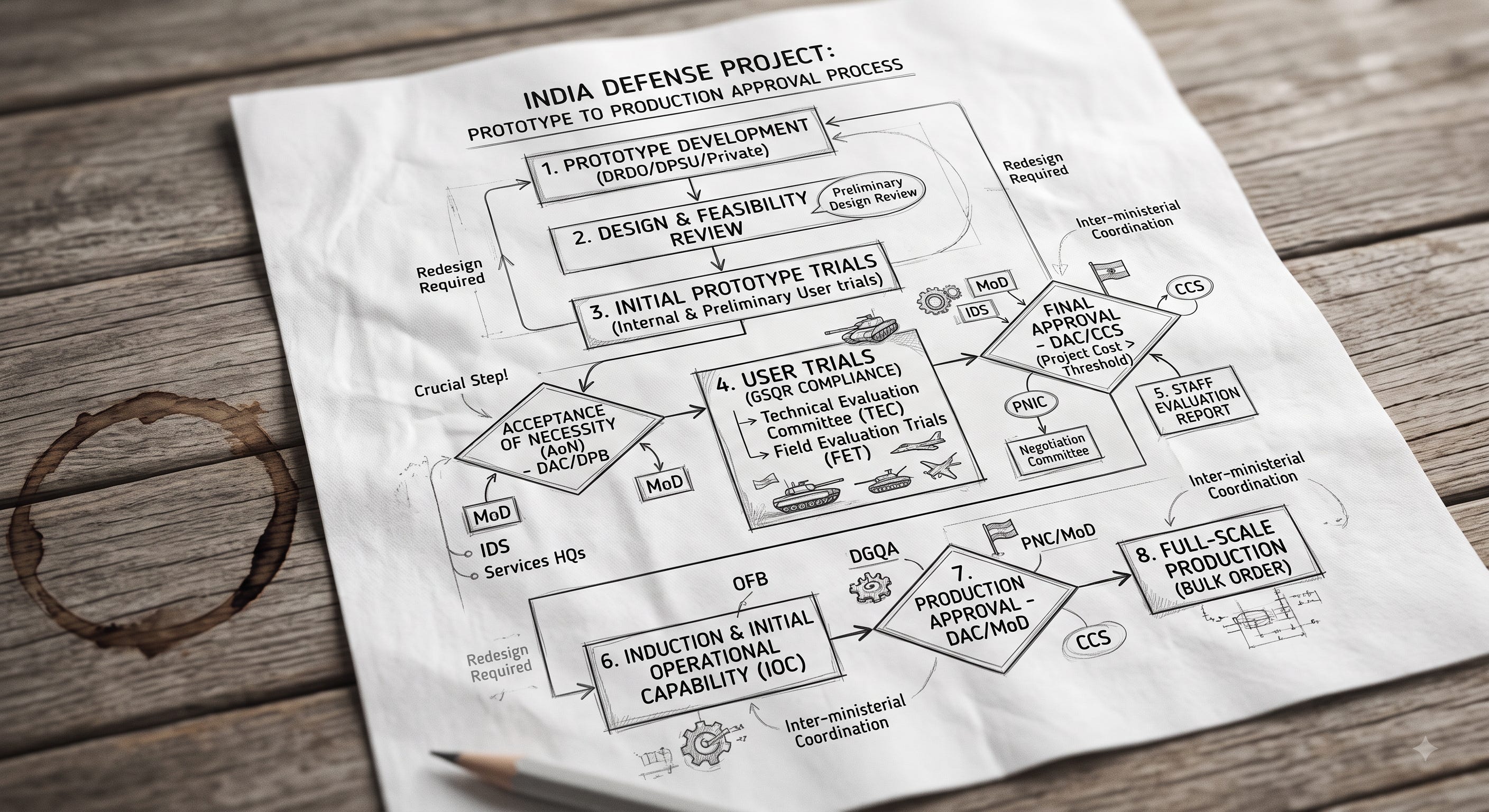
Apollo’s order book stood at INR 1,700 Cr and the management expects to close FY27 with an order book of INR 3,500 - INR 4,000 Cr — that’s 4X FY26 revenue. Pretty darn impressive if it happens.
What we’re interested to know, is how much of this order book would comprise of ‘production’ orders. This # was not revealed in the Q1FY27 con-call but the management is striving to make production orders around 45-50% of the order book.
Several projects of the company have entered / are entering into production phase:
Multi Influence Ground Mines (MIGM) — the company has received DAC approval. Expecting PO to be released in Dec’26 / Jan’27. Order value of INR 3,500 CRORE out of which AMS should get 70% of the contract value. Execution would be spread over 3 years.
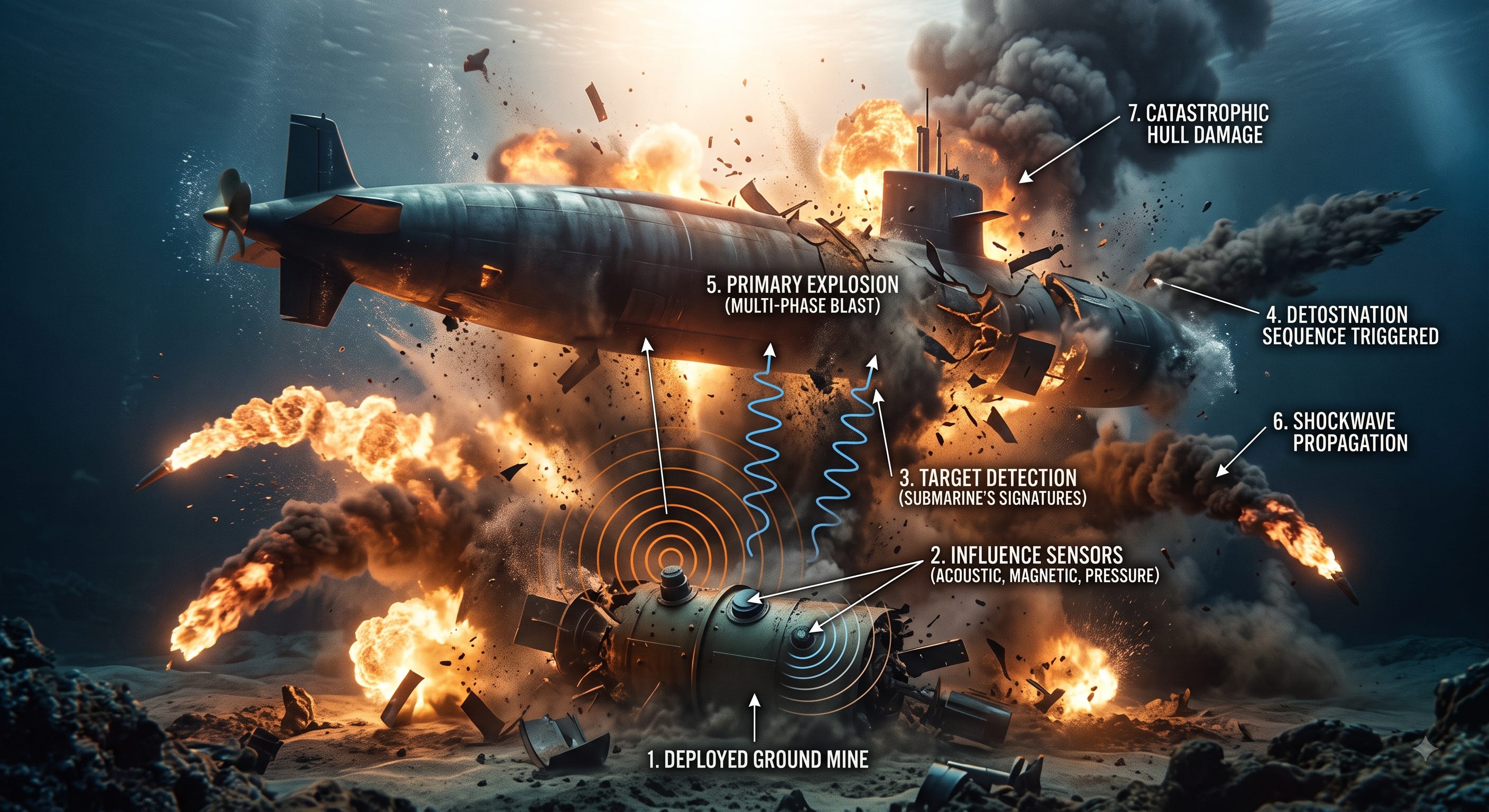
Moored Mines — Acceptance of Necessity (AoN) approval has been given for these mines and these mines are entering the production phase.
Limpet Mines — trials have been successful, and these mines should enter production phase very soon.
QRSAM — this is a short range surface to air missile system being developed by BEL, BDL and DRDO. This project involves more than 1 crore components. AMS expects to deliver 5 sub-systems for this project.
PINAKA — is an indigenous multi-barrel rocket launcher developed by DRDO. AMS is expecting to develop a sub-system for this project. Expecting 2,000 Pinakas to be deployed, and the sub-system supplied by AMS would be around 85 lakhs (order potential of INR 1,700 Cr)
SDD [Safety & Detonation Device] — AMS completed the successful handover of its indigenously developed Safety & Detonation Device to the Indian Navy offering significant cost savings and reducing import dependence for the Indian Navy. Expecting production orders to follow.
Its important to track IF the company wins these orders + the quantum of orders won
Is Apollo working on other scalable technologies?
There were 2 milestones which are worth highlighting — which act as a validation for Apollo’s engineering capabilities.
Anti-submarine system
AMS received a Make-II Prototype Sanction Order from the Indian Navy for the development of SAVIOR anti-submarine warfare (ASW) system. Its a unmanned self-powered platform capable of patrolling the ocean, operating silently beneath the sea, to listen to submarines and detect underwater threats.
Conventional ASW frigates costs a fortune to build and operate. In contrast, these autonomous unmanned platforms can deliver continuous surveillance at a fraction of the cost.
Make-II category is one of India’s most progressive defence procurement pathways under the Defence Acquisition Procedure (DAP).
Indian companies are invited to develop indigenous prototypes of advanced military systems on their own using their own funds with the Government committing to procure successful prototypes at scale.
IPREK program
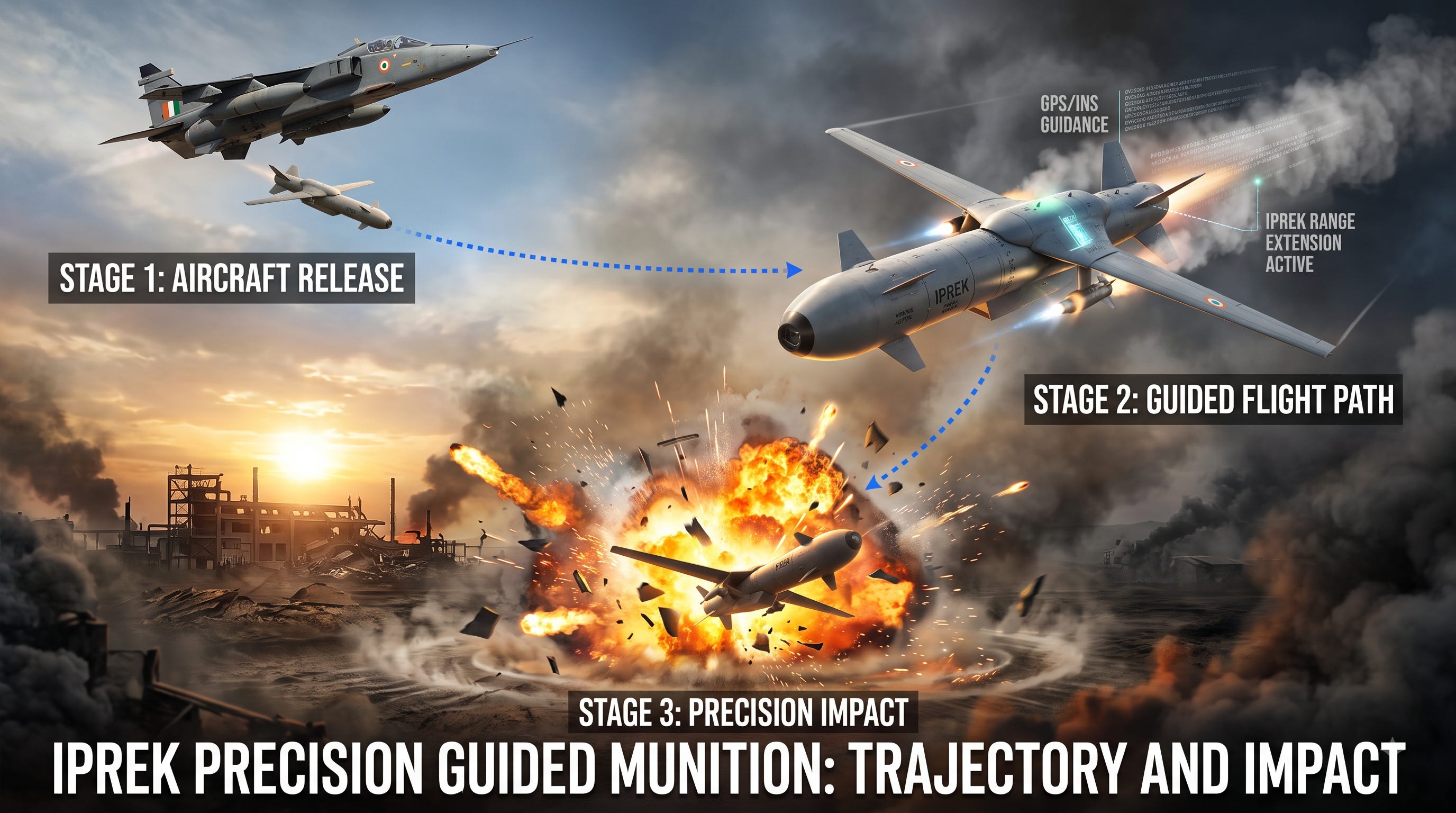
India has a large inventory of dumb unguided bombs. The IPREK program is designed to convert these unguided bombs into long-range precision weapons.
A weapon fitted with IPREK can be released from 80-100kms away and still land within 3 meters of its intended target. That’s the idea. An aircraft fitted with IPREK could release a bomb from 100kms away well beyond most air defence systems.
IPREK integrates India’s indigenous NavIC satellite — making it one of the first weapon systems in the world to use Indian satellite constellation.
What’s in it for Apollo?
Indian Air Force has shortlisted AMS as the ‘prime development agency’ for this program under the Make-II category.
Verdict — if either of these programs are successful and the prototypes are accepted, it could be a HUGE DEAL for Apollo. The fact that the company received these Prototype Sanction Orders (PSOs) directly from the Indian Navy + Indian Air Force, is a hint that the company is undergoing a major transition in its journey.
Challenges ahead
I have painted a pretty rosy picture till now, but don’t let that sway you from the hard facts. The company has undertaken two acquisitions in quick time, and they will need to find a way to make these acquisitions work.
IDL Explosives remains a loss making business, pressurizing overall PAT. The management didn’t talk much about their plan to turnaround this business in the Q1FY27 con-call, since most investors were interested in the Premier Explosives acquisition. Classic distraction.
If you look at the return ratios — 5Y ROCE (12%) + ROE (11%) — they are sub-standard compared to [its gigantic] peers. This will further reduce after the fundraise is completed as more capital is deployed in the business. Once production orders > prototype orders, these ratios should improve.
The management has guided for a revenue growth of 40-45% for FY27. No guidance given on EBITDA, however I think EBITDA will remain in the range of 21-24%. Debt remains within safe limits.
Promoter pledge has dropped from 48% → 35% → 30%. Management had committed to reduce it to ZERO, but they keep delaying this timeline.
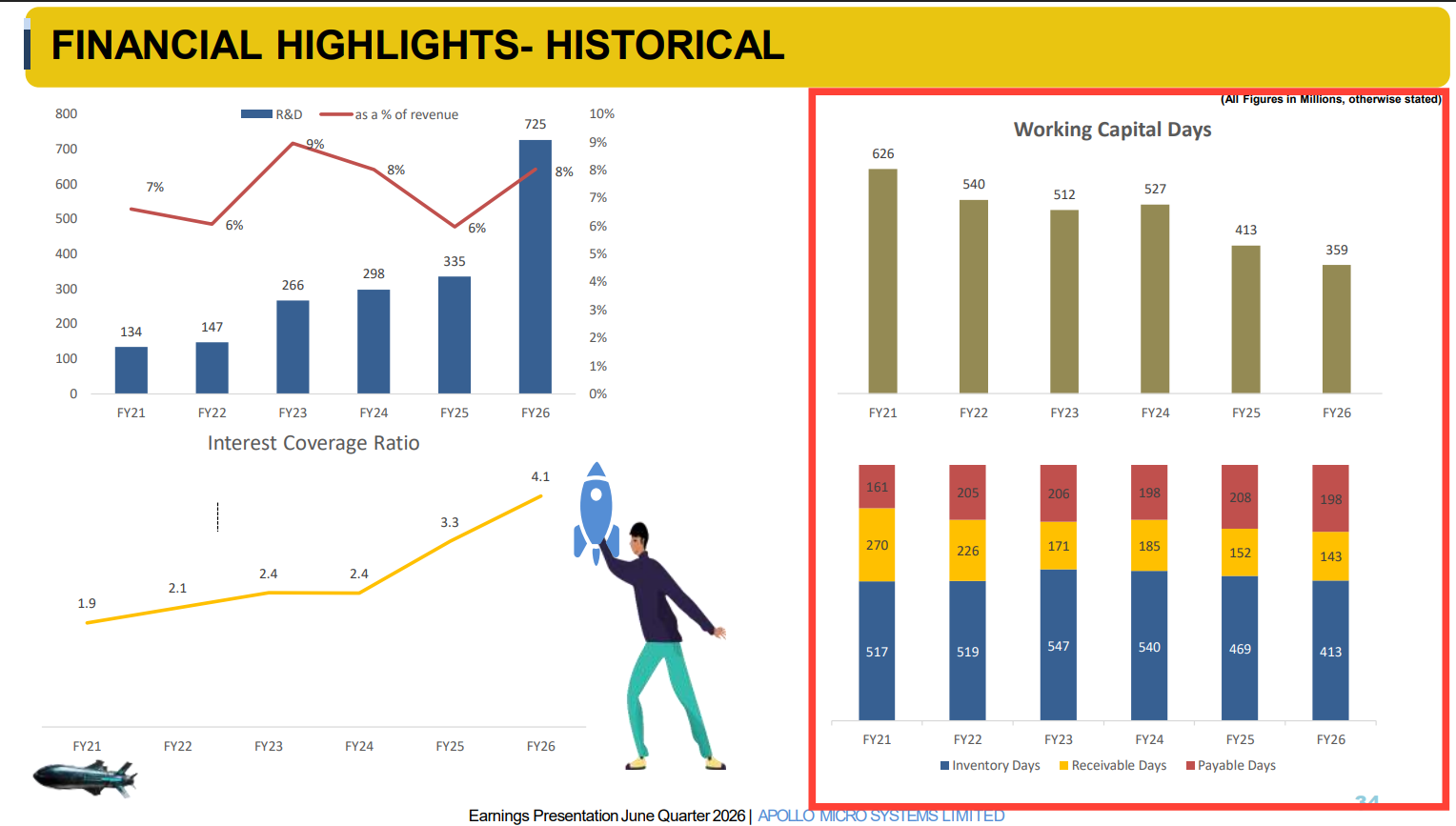
You can see from the chart above that working capital cycle is improving gradually, yet still remains at 359 days — in simple words, an amount equal to FY26 sales (INR 904 Cr) is blocked in running the business.
This is a critical metric to track which will reveal whether the company is adding and executing more production orders.
More production orders should lower the working capital cycle. Better capital churn = increase in ROCE. A high ROCE, is a single most important metric which tells you how well a business is being run.
R&D expenditure as a % of revenue is 8% — which is decent for a defence tech company. However, employee benefit expenses remain low at JUST 5% of top-line, which makes you wonder whether the company is being able to retain top talent.
Unit III facility is expected to be fully operational by the end of FY27, post which the company will have the capacity to take more orders and explore the export market, which should be margin accretive. Testing of systems will be done in Unit III, which will further increase project execution timelines.
Conclusion
At a P/E of 121 times, at a market capitalization of INR 14,500 Cr — a lot of optimism is already built into the price of the stock. To deliver exponential returns from here, the company needs to keep delivering stellar performance QoQ whilst operating on the edge of innovation and building new scalable technologies.
The first and most pressing job, is to make the acquisitions work and extract synergies from IDL Explosives + Premier Explosives.
There is a lot to be excited about, however execution is everything. It is what manifests potential into reality.
Disclosure: I had invested in the AMS a couple of years back, and will look to add more if the stock corrects by 15-20% from these levels.
If you liked this article, share it in your investing network. Comment, like, show some love! I spend a lot of time in research & it would mean the world to me if you could recommend this blog to your friends.
[Note: The author is not a SEBI registered investment advisor and the contents of this article do NOT constitute investment advice. Always do your own research before you invest in a company]
I Enjoyed Reading This Article, Thank You Siddharth 🙏🔥